
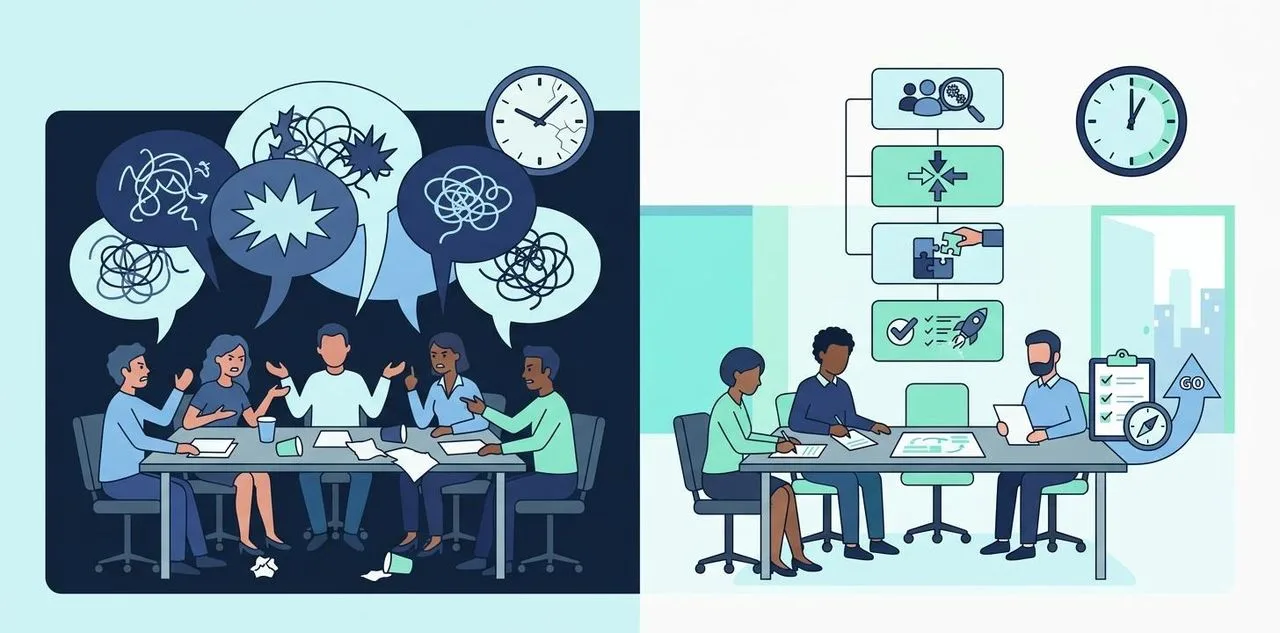
I walk into an SME and I see that they hold monthly review meetings. In reality, they are sessions where the team vents all the accumulated frustration, the owner gets a shower of complaints, and the next month it starts all over again.
I ask: “Which concrete actions came out of the last review?”.
Nobody can answer. Because there weren’t any.
An effective review meeting isn’t a collective cry. It’s a structured moment to generate 2-3 actions that actually change things.
Here is the structure that works.
You start with emotions. Not because I want to do psychology. But because emotions are the context of what happened. If the team says “We’re frustrated”, that frustration explains why certain results didn’t arrive. It isn’t an excuse. It’s information.
Then you move on to results. What went well? What didn’t? Not “department X is a pain”. Concrete: “We delivered 15 orders out of the 18 planned. The three missing ones were postponed to June.”
Then the blocks. What prevented the results? “The three orders didn’t ship because we waited for confirmation of the raw material from suppliers who were 5 days late against their promise.”
Finally, the actions. Not “next month we’ll do better”. Concrete and assigned: “We’ll contact the suppliers on Monday to renegotiate the lead times.” Who? The purchasing manager. When? Monday. What do we expect? An answer by Wednesday.
That is an action. It has an owner, a deadline, an expected result.
This is the change of attitude.
The meeting isn’t for complaining. It’s for understanding what happened and deciding what to do differently. If the team keeps complaining about the same thing month after month, it means no action was taken to change it. And that is the responsibility of whoever leads the meeting, not of the team.
So when someone starts venting without concrete blocks behind it, I interrupt. “Frustration is fine. Where is the concrete block? What is it that stops you from doing your job?”. If they can’t answer, the frustration is noise. It isn’t valid to generate an action.
Time is critical.
A review meeting must not last more than 60 minutes. Emotions (10 minutes), results and blocks (30 minutes), 2-3 concrete actions (20 minutes).
This isn’t chance. It’s discipline. If I let the meeting run over, the team starts repeating itself. Conversations become circular. Energy disperses. No action comes out.
What changes after four meetings done well is huge.
The team understands that meetings aren’t venting. They are working moments. They start coming prepared with data. They start identifying the real blocks, not the imaginary ones. And they start to feel that things are really changing, because the actions they decided on get done.
Then the next meeting isn’t a cry. It’s a progress report on what they decided the month before, plus the new blocks that have emerged.
If your review meetings are venting sessions without actions, the problem isn’t the team that complains. It’s the structure of the meeting that allows complaints without consequences.
How many concrete actions came out of the last review meeting in your company?